
Table of Contents
ToggleIntroduction
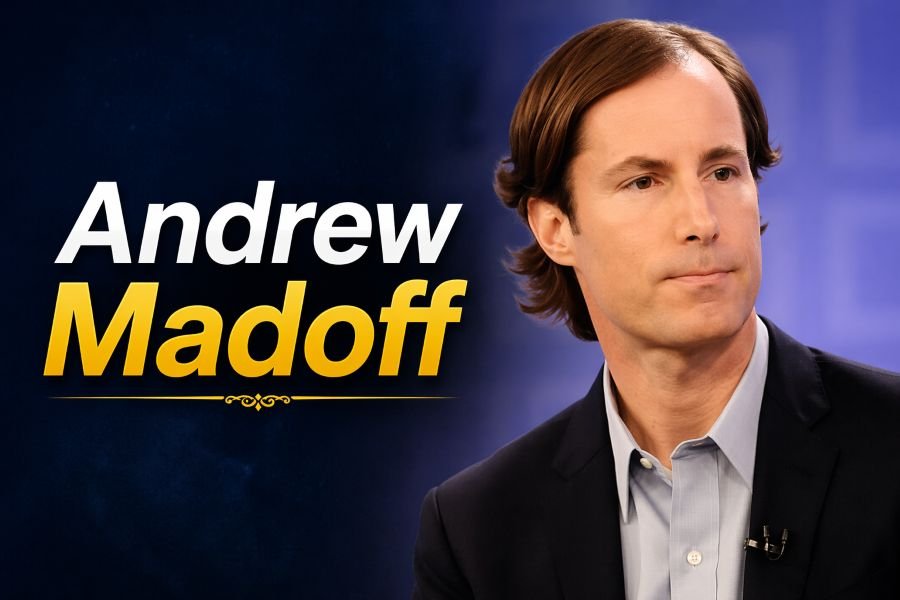
Andrew Madoff was an American financier whose life became globally known due to one of the most shocking financial scandals ever recorded. While he was born into privilege and financial success, his name became linked with controversy, moral courage, and personal tragedy.
Despite being the son of Bernie Madoff, Andrew carved out his own identity within the financial world. His decision to report the fraud changed public perception and defined his legacy in a way few could have imagined.
Quick Bio
| Field | Details |
|---|---|
| Full Name | Andrew Howard Madoff |
| Date of Birth | April 8, 1966 |
| Age at Death | 48 years |
| Birthplace | New York, United States |
| Nationality | American |
| Profession | American financier |
| Education | University of Pennsylvania (Wharton School) |
| Father | Bernie Madoff |
| Mother | Ruth Madoff |
| Sibling | Mark Madoff |
| Spouse | Deborah Anne West (separated) |
| Children | 2 |
| Date of Death | September 3, 2014 |
Early Life and Background
Andrew Madoff was born in New York into a financially powerful and well-connected family. His father was already building a strong reputation on Wall Street, which meant Andrew grew up surrounded by wealth, influence, and business exposure.
From an early age, Andrew was familiar with the world of finance. However, his upbringing was not just about privilege—it also came with expectations. Being part of a high-profile family meant he was often under pressure to follow in his father’s footsteps.
Education
Andrew attended the prestigious University of Pennsylvania, where he studied at the Wharton School. He graduated in 1988 with a degree in economics, equipping him with the knowledge needed to enter the competitive financial industry.
His education played a key role in shaping his professional life. It allowed him to step directly into the world of finance with credibility and confidence, especially within his family’s business operations.
Career Beginnings
After completing his education, Andrew joined his father’s firm, Bernard L. Madoff Investment Securities. This marked the beginning of his professional journey as an American financier.
He worked alongside his brother Mark Madoff, primarily handling operations in the legitimate trading division. His responsibilities included managing trading activities and ensuring smooth business processes.
Career Overview
Andrew Madoff spent years building a stable career within the financial industry. He was known for working on the legitimate side of the business, which focused on market-making and trading rather than investment advisory services.
Throughout his career, there was no evidence that Andrew participated in fraudulent activities. Instead, he maintained a professional reputation until the scandal involving his father came to light.
The Turning Point: Madoff Scandal
The most defining moment of Andrew’s life came in December 2008. His father confessed that the investment arm of the business was actually a massive Ponzi scheme.
Faced with a moral dilemma, Andrew and his brother made a critical decision. They reported the fraud to authorities immediately, which led to their father’s arrest the next day. This action showed a commitment to truth, even at great personal cost.
Career Timeline
Early Years
- 1966: Born in New York, United States
- 1988: Graduated from Wharton School
Professional Growth
- Late 1980s: Joined family firm
- 1990s–2000s: Worked in trading division
Crisis and Aftermath
- 2003: Diagnosed with cancer
- 2008: Reported Ponzi scheme to authorities
Final Years
- 2014: Passed away after illness
Personal Life
Andrew married Deborah Anne West in 1992, and the couple later separated. Despite personal challenges, he remained devoted to his family and had two children.
In later years, he was in a relationship with Catherine Hooper. His personal life, however, was deeply affected by the public exposure of the scandal and its emotional consequences.
Health Struggles
Andrew Madoff was diagnosed with mantle cell lymphoma in 2003, a rare and aggressive form of cancer. Although he initially responded to treatment, the disease returned years later.
He believed that the intense stress caused by the scandal may have contributed to the recurrence. His battle with illness became a significant part of his life story, reflecting both resilience and hardship.
Challenges and Legal Pressure
Following the scandal, Andrew faced lawsuits from victims seeking financial recovery. Although investigations found no evidence linking him to the fraud, he still endured legal and public scrutiny.
These challenges affected both his financial standing and personal life. It highlighted how deeply the scandal impacted even those who were not directly involved.
Legacy
Andrew Madoff’s legacy is complex yet powerful. He is remembered not just as the son of a controversial figure, but as someone who made a difficult ethical decision.
His actions demonstrated that integrity can prevail even in the most challenging circumstances. He remains a symbol of accountability, courage, and the human cost of financial wrongdoing.
Conclusion
Andrew Madoff lived a life shaped by privilege, crisis, and moral responsibility. While his early years were defined by financial success, his later life became a story of truth and consequence.
His decision to expose one of the largest financial frauds in history ensured that he would be remembered for his integrity. In the end, Andrew Madoff’s story is not just about scandal—it is about the courage to do what is right.
FAQ
Who was Andrew Madoff?
Andrew Madoff was an American financier and the son of Bernie Madoff, known for exposing his father’s Ponzi scheme.
Was Andrew Madoff involved in the fraud?
No, investigations found no evidence that he participated in the fraudulent activities.
What was Andrew Madoff’s profession?
He was an American financier working in the trading division of his family’s firm.
How did Andrew Madoff die?
He passed away in 2014 due to complications from cancer.
What is Andrew Madoff remembered for?
He is remembered for reporting the Ponzi scheme and choosing integrity over loyalty.
